Thursday, August 8, 2019

Rise of the Ape


In the early 1970s, a chimpanzee named Nim was plucked from his mother's arms and transported into human homes in the hopes that he would learn sign language and open a window into ape thoughts.
Harry Benson/Roadside Attractions
Project Nim
  • Director: James Marsh
  • Genre: Documentary
  • Running Time: 93 minutes
Rated PG-13 for some strong language, drug content, thematic elements and disturbing images
With: Nim Chimpsky, Herbert Terrace, Stephanie LaFarge, Laura-Ann Petitto, Joyce Butler

Watch Clips

'Cats'

'Cats'

'Chimps Aren't Humans'

'Chimps Aren't Humans'

'Play'

'Play'
In 1973, an infant chimpanzee was taken from his mother's arms and sent to live with a human family as part of a Columbia University psychology experiment.
The goal of the project was to see if the animal, named Nim Chimpsky, could be conditioned to communicate with humans if he was raised like a human child in a human household. He learned some very basic words in American Sign Language, but Nim continued to act like a chimp — he bit the children in the house and didn't understand how to behave like a human child. It was decided that the family could no longer care for Nim, and he was shuffled from caretaker to caretaker for several years.
In 1977, Nim attacked one of the people taking care of him, and the experiment ended. At that point, researchers said he knew more than 125 ASL signs — but no one knew quite what to do with Nim. He was sent to a medical research facility, where he lived in a cage with other chimps for the first time in his life, before being rescued and sent to an animal sanctuary. He died in 2000.


Nim and the many people who raised him over the years are the subjects of James Marsh's new documentary Project Nim. Marsh and two of the people who worked with Nim join Fresh Air's Terry Gross for a discussion about the film and about the controversial experiment.
"The premise of the experiment was to treat him as much like a human child as possible and to give him the nurturing of a human child in order [to see if] he would behave like one," Marsh says. "And it was quite striking that there wasn't an investigation into what chimpanzees actually were or what they're like. And the wild animal comes out in him very quickly, and [no one] was prepared for that."
Jenny Lee: 'He Was Just Included In The Family'
The first family to take Nim in lived on the Upper West Side of Manhattan in a giant brownstone. Jenny Lee, who was 13 years old at the time, remembers her mom, Stephanie LaFarge, raising Nim alongside her and her siblings. She says her mother grew quite attached to the chimp, even breastfeeding him throughout his stay at their house.
"He needed diapers, he needed bottles, he needed feedings," Lee recalls. "And it was odd he was a chimp. But at the same time, there was kind of a normalcy about it in that he was just included in the family right away."
While Jenny and her siblings went to school, Nim learned sign language with researchers at Columbia University. The goal was to open up a window into Nim's thoughts and to see if he could develop real language skills. When he came home each night, Nim would play with the Lee children and mimic their behavior. But as he aged, he became more aggressive — and no one knew what to do.
"It was really the biting that became the big problem after maybe he was a year old, because it's painful and it can draw blood," Lee says, "and with human babies, you can teach them not to do that. And that was not something that Nim was able to learn to really control."
Nim left the family's house and moved in with a series of caretakers before going to a primate facility on the grounds of the University of Oklahoma.

Bob Ingersoll (left) spent nine years with Nim, the subject of an experiment to see if apes could communicate with humans using sign language. Ingersoll is now the president of Mindy's Memory Primate Sanctuary.
Roadside Attractions
Bob Ingersoll: 'Keeping Chimpanzees In Cages Is Torture'
Bob Ingersoll, a graduate student at the University of Oklahoma, was working as a research assistant at the primate facility and met Nim on his first day.
"You could read [fear and apprehension] through his facial expression and his body language," Ingersoll says. "It was very distressing to him and ... we were really worried about Nim and we spent quite a lot of time with him, making sure he was eating and drinking and not being picked on by the other chimps."
Ingersoll immediately began using sign language with Nim to comfort him. He says the chimp was never aggressive around him — and quickly became one of his good friends.
"It was easy to hang out with him," he says. "He did for me the same thing that I think that I did for him, which was make him feel comfortable and certain and familiar with the situation."
While taking long walks around the grounds of the primate facility, Ingersoll occasionally smoked pot with Nim, who had been introduced to marijuana in New York City and even appeared in the magazine High Times in 1975.
"He actually signed 'stone smoke time now' to us first," Ingersoll says. "We were shocked. Although we were familiar with chimpanzees that did things like drinking and smoke cigarettes and that sort of thing, I'd never had a chimpanzee request weed from me. That was an eye-opener."
Ingersoll and Nim spent much of their time together, until Nim was once again moved, this time to a medical research laboratory. Ingersoll later helped rescue Nim from the research facility, and the chimp was moved to a ranch for abused animals.
"What he needed at that point was to be with other chimps," Ingersoll says. "Chimps don't need to be with humans. They need to have a chimp life. So my own personal need to hang out with Nim or walk with Nim wasn't as important to me as doing the right thing for Nim. ... Chimpanzees in captivity is just not where they ought to be. ... I would hope that one of the lessons that we learned from Nim's life is that keeping chimpanzees in cages is torture and really plays havoc on their mental health."

Planet for all ape

dipetik dari : https://www.theguardian.com/science/blog/2011/aug/08/project-nim-review

Two films on release in the UK later this week, Rise of the Planet of the Apes and the documentary Project Nim, demonstrate that fact is stranger – and sadder – than fiction

Project Nim in pictures
Pinterest
Rise of the Planet of the Apes, which goes on general release in the UK from Thursday, is a prequel to the original film. Or perhaps it's a prequel to the prequel? At the film's climax there was clearly still more "evolution is revolution" to come from 20th Century Fox's simian uprising franchise.
The fictional life story of the chimp Caesar, played by Andy Serkis, is similar to the real-life story of a chimp called Nim who was born at the Laboratory for Experimental Medicine and Surgery in Primates in Tuxedo, New York, raised by a human family and learned to communicate through sign language.
The fictional Caesar undergoes genetic modification and develops spoken language, among other advancements, that facilitate the revenge of this "damn dirty ape" against his human tormentors.
Fact can be stranger and sadder than fiction. A day after Rise of the Planet of the Apes is released, Project Nim, a feature documentary from the team that made the excellent Man on Wire opens in the UK. It tells the true story of Nim, who "escapes" the laboratory as an infant when he is selected for a highly unusual experiment. He is breast-fed by a loving, surrogate human mother, Stephanie LaFarge, and raised at her home in New York as the youngest sibling in her large family.
During Nim's five years of freedom he learns to "talk" through sign language, use a toilet and smoke a joint with Bob Ingersoll – a psychology graduate anxious to improve the welfare of captive primates – before being returned to the laboratory.
Our species' interest in the minds of our ape cousins is an old obsession. In 1661, a chimpanzee arrived in London on a boat from Guinea, Africa. Apes rarely survived captivity, so the chimp's arrival caused excitement among London's intelligentsia. Samuel Pepys wrote in his diary that the ape, " ... is so much like a man in most things, I do believe it understands English and I am of the mind that it might be taught to speak and make signs."
Centuries rolled by and the chattering classes' desire to converse with our mute cousins never waned. In the US in the 1930s and 40s experiments were conducted in which human families, with an infant, adopted a chimp and raised the youngsters together like siblings. The hypothesis was that chimps would spontaneously learn to talk the way human children do. But as anatomists had already established, the chimpanzee larynx is positioned far too high for spoken words to be formed. No one should have attempted experiments that could only conclude with a confused chimp.
A surprising behaviour did manifest, however. The neuroplasticity of the human infants' brains seemed to allow an evolutionary regression and the parents were horrified when their toddlers began lip-smacking, hooting and moving anthropoidally, as feral children have been observed to do – perhaps demonstrating that it is easier for us to ape apes, than for apes to ape us.
Until the 1960s, symbolic representation of language was thought to be uniquely human. The views of behaviourists such as BF Skinner still held sway, insisting that minds, personalities, beliefs and desires were "mythical". Jane Goodall was in the early years of her field research at Gombe, shocking us with tales of chimps using tools, and being criticised by the scientific establishment for treating the animals as individuals, daring to name them instead of numbering them, and identifying differences between male and female behaviour (previously, only captive, male animals had been studied).
It was against this background that psychologists Beatrix and Allen Gardener decided that if chimps couldn't talk like humans, they would try to teach a chimp American Sign Language (ASL). The Gardeners raised the chimpanzee Washoe at their home (no human baby this time), teaching her more than 300 signs that allowed her to request food items and play activities. When she first laid eyes on a swan she spontaneously signed "water bird", showing an ability to innovate language.
Project Washoe proved that chimps possessed abilities for symbolic language and the experiment was heralded as a breakthrough in our understanding of chimpanzee cognition. But linguists such as Noam Chomsky were highly critical of the research. Putting aside the evidence of symbolic behaviour in chimps, Chomsky proposed that syntax (rules of grammar) were universal among humans and unique to our species. If chimps couldn't demonstrate the spontaneous acquisition of syntax then they were merely mimicking rather than comprehending the symbols they used.
This was a red rag to the ambitious psychologist Herb Terrace at Columbia University, and it's where Project Nim begins, with Terrace naming the ape Nim Chimpsky to poke fun at Chomsky.
For the film, producer Simon Chinn and director James Marsh were able to gather an extensive archive of original footage. At a revelatory moment, the maturing Nim meets another chimpanzee for the first time and spontaneously, frantically, begins signing. I would have loved subtitles here – my only criticism of the film. (Can an ASL-speaking reader who has seen Project Nim translate this scene?)
Although the film presents an authentic chronology of Nim's troubled life, some re-enactment was necessary. In October last year I interviewed Peter Elliott and Pauline Fowler of Animated Extras, who are credited on the movie as the primate choreographer and sculptor of the "re-enactment unit" (animated sculptures and chimp suits), respectively. I like to think I know a little bit about chimps and I am familiar with Fowler and Elliott's work, but I left the screening of Project Nim unsure what was genuine archive footage and what was re-enactment, which is a remarkable tribute to their skills.
Today, Terrace's Project Nim experiment is rarely cited: it's a skeleton in the comparative psychology cupboard. When scientists talk about ape intelligence, they usually cite experiments that ran concurrently or have been conducted since Project Nim.
There were clear failings in Terrace's methodology. For example, within the space of four years more than 60 sign language teachers worked with Nim. He would form attachments and build trust with a particular teacher, only to have them leave and another student arrive.
And Terrace's starting assumption was that chimps are like mute children, with the same linguistic potential. Nim was taught to imitate his teachers, face to face, in the way ASL is taught to deaf children (who also learn by imitation, but eventually, spontaneously, acquire syntax). So the experiment didn't prove one way or another whether Nim had developed syntax.
By contrast, primate language researcher Sue Savage-Rumbaugh eliminates the potential for imitation by putting the instructor out of sight and having the ape wear a headset and listen to audio instructions to perform novel, odd activities, such as, "put the toy car in the fridge". The apes comply – Savage-Rumbaugh's methods have thus demonstrated that apes "comprehend" sentences.
Its methodological failings meant that Project Nim was considered a lamentable and regressive step by fellow primatologists. More seriously, the whole field was set back after Terrace claimed Nim had "fooled" him into thinking apes could acquire syntax, in much the same way the horse Clever Hans in the 1890s music hall act fooled people into thinking he could count (when in fact he was picking up unconscious cues from the humans).
Today, primatologists including David Premack, Roger Fouts, Tetsuru Matsusawa, Sue Savage Rumbaugh, Daniel Povinelli, Dick Byrne, Andy Whiten and Frans de Waal have raised our awareness of ape theory of mind, symbolic behaviour, mathematical ability, spontaneous use of language, language comprehension and self-awareness, among other abilities once thought to be uniquely human.
But back in the late 1970s the ill-conceived Project Nim was a high-profile, glamorous experiment that psychology students begged to work on and TV crews queued up to film. Nim became a celebrity, appearing on the cover of Time Magazine.
Chimps are long-lived animals, they bond with their carers in the way humans do, but when Nim was five years old Terrace decided he had enough data and Nim was abruptly dispatched back to the laboratory and the project was abandoned. The newly incarcerated Nim persisted in signing to the lab staff through the bars of his cage, but no one there was familiar with ASL.
When the Laboratory for Experimental Medicine and Surgery in Primates finally closed, Nim and a couple of other chimps were rescued by Ingersoll and taken to a welfare centre. Freed once more from the lab, LaFarge visited him and with guilt-fuelled bravery gave the now adult Nim the opportunity to rise and take revenge against her for all the humans who had let him down. In a dramatic act, more at home in a Planet of the Apes film script than real life, LaFarge entered his enclosure knowing he would attack.
The documentary Project Nim has no agenda and no judgement is made on the ethics of the experiment. All the key figures are interviewed, including Terrace, whose opinion of the project's merits is clearly at odds with those of the other interviewees.
I was struck by the fact that, four decades on, all those who helped to facilitate Terrace's Project Nim retain highly charged, fond memories of their time spent with the chimp – but not of their time spent with Terrace.
This article was amended on 9 August 2011. The original stated that Rise of the Planet of the Apes is released in the UK on Friday. This has been corrected.


Friday, July 12, 2019

Cabaran Bukit Langkap - Suling Hill

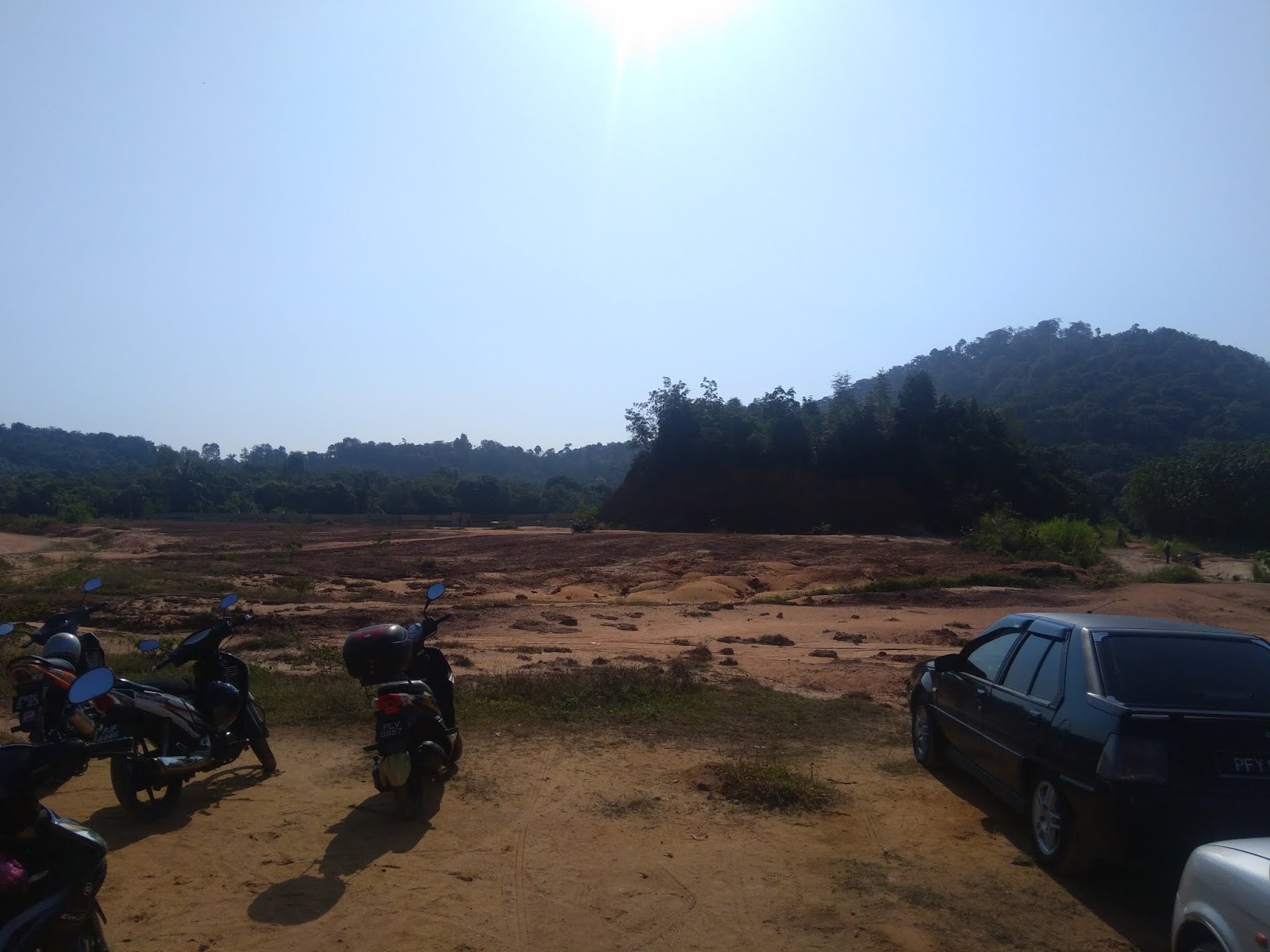
Bukit Langkap atau Suling Hill terletak di Mengkuang, Bukit Mertajam, Pulau Pinang. Terkenal dengan  Dusun Durian Duri Hitam. Adapun aku ke sini bukan untuk memburu durian tapi untuk mengempiskan perut.


  Cara nak sampai

Kalau dari Sungai Lembu, 20 meter selepas simpang ke Berapit, belok ke Kanan. Boleh nampak papan tanda ini di kepala simpang.


Masuk melalui jalan tanah merah  ini yang kelihatan lead to nowhere.


kira-kira selepas  seratus meter, anda akan sampai ke satu padang kosong yang luas untuk meletak kenderaan. ada air dijual di sini, untuk mereka yang telah kehausan seusai turun dari bukit langkap.


Ada dua jalan masuk untuk mendaki. Di sebelah kanan hanya mampu di daki oleh kaki, di sebelah kiri mampu dilalui oleh kaki dan kereta.


Untuk hiking, saya mencadangkan masuk melalui laluan kanan (laluan masuk ke kebun getah) . Ini kerana jalan ini agak cerun, sesuai untuk bermula, di mana tenaga masih banyak. Kemudian turunlah melalui laluan kiri. Laluan kiri ini akan melalui kawasan landai yang panjang, sesuai apabila telah kehabisan tenaga.


Saya bermula kira-kira jam 8.45 pagi, dan sekitar 9.15 pagi telah sampai ke puncak.


Berehat kira-kira 5 minit untuk mengambil gambar, dan saya mulai turun melalui laluan kiri.


 ada dewan dan pentas kecil, boleh guna untuk acara penyampaian hadiah.

 wakaf sebelah dewan.
 ada lapangan untuk berkhemah


tugu durian


Menuruni laluan landai yang dimulai dengan simen dan akhirnya menjadi tanah merah
Kira-kira hampir jam 10.00 pagi saya sampai ke lapangan parkir.

Bolehlah kita simpulkan bahawa kita perlu 30 minit untuk mendaki, dan 30 minit untuk turun.
bagus kalau dapat bawa air minum sendiri. Segelas teh tarik ais cincau kaw ialah RM3.00


Monday, June 24, 2019

I Trained Like Superhero

I read One Punch Man manga a long time ago. Not interested me at that time. I didnt expect somebody would follow his training regime.

The menu is a joke.


But somehow, somebody , few buddies actually, challanged themselves to try the training regime.

The training menu may be a joke, but the result is awesome.

You may refer to the below:

After 30 days : https://www.youtube.com/watch?v=FF5qCUFyPag
After 60 days: https://www.youtube.com/watch?v=IVdMMvTE0u4
After 100 days: https://www.youtube.com/watch?v=_nG43cKEbAg

I think I need to do something with my belly.


BMI
I need to get to 68kg to be normal.
65kg would be good

DIET
There would be no change in diet. I would just eat whatever my wife cooked. Maybe drink more on  plain water. Once in a while has superhigh sugar content of  teh tarik, milo ice and 100plus.


PUSH UP
To do a hundred push -up daily, is in reality, at the moment , is impossible. This is reality. I have to accept it. I can barely do one push-up now. So weak!

So, I target that by 30 days, I would be able to do  a straight 10 push-up.
If we split the level as below, 10 push-up would be at level 1.

Level 1: 10 push ups, sit ups, squats + 1km run
Level 2: 20 push ups, sit ups, squats + 2km run
Level 3: 30 push ups, sit ups, squats + 3km run
Level 4: 40 push ups, sit ups, squats + 4km run
Level 5: 50 push ups, sit ups, squats + 5km run
Level 6: 60 push ups, sit ups, squats + 6km run
Level 7: 70 push ups, sit ups, squats + 7km run
Level 8: 80 push ups, sit ups, squats + 8km run
Level 9: 90 push ups, sit ups, squats + 9km run
Level 10: 100 push ups, sit ups, squats + 10km run

We should see that on 1st August 2019, I would be able to reach level 1 Push-Up.

RUNNING 
I would not run. I  have pain in the heel, walking alone made me suffers. So, instead, I would replaced it with BICYCLE CRUNCH / HIP EXTENSION / RUSSIAN TWIST.
All these should attack my belly fat.

I think of SWIMMER, but it basically same with HIP EXTENSION, so I  will just do HIP EXTENSION.

In short, I plan to do the below, maybe can do 3 sets of it?

SAITAMA LEVEL ONE MY REGIME
10 push ups 10 push ups
10 secs plank
10 sit ups 10 bicycle crunch
10 hip extension
10 russian twist
10 squats  10 squats
1km run 10 buttkicker
10 toe touches


Saturday, June 8, 2019

Lagu Raya Malar Segar Sepanjang Zaman - 6 Terbaik

apabila menjelang aidilfitri, perkara yang sangat sinonim ialah lagu raya.

lagu apakah yang anda paling minati.? setiap orang tentulah ada citarasa tersendiri.

ada banyak lagu yang dianggap sebagai malar segar ( evergreen), namun, jika diminta 6 lagu terbaik, saya memilih yang berikut : 

(1) Saloma - Selamat Hari Raya (versi moden) : https://www.youtube.com/watch?v=varKNaGIhXk

Untuk Rujukan : Saloma - Selamat Hari Raya  (Old Cha Cha Version ): https://www.youtube.com/watch?v=D1h11VZ57QY

(2) Anuar & Elina - Suasana Di Hari Raya : https://www.youtube.com/watch?v=A_dxcMDcGbs

Khamas The Voice Kids ada cover lagu ini dalam Bahasa Thai : https://www.youtube.com/watch?v=jD5pHWaj-Uo
(3) Uji Rashid & Hail Amir - Seloka Hari Raya : https://www.youtube.com/watch?v=jgMi_NP9ToA

(4) Rahimah Rahim - Selamat Berhari Raya : https://www.youtube.com/watch?v=gK5j3BcXCFY

(5) Sharifah Aini - Suasana Hari Raya : https://www.youtube.com/watch?v=23kN41y3U60

(6) Noor Kumalasari - Pulang Di Hari Raya : https://www.youtube.com/watch?v=oxWR4j1TeGg
berikut adalah antara lagu -lagu raya yang dianggap malar segar  :

1. selamat hari raya - saloma 2. aidilfitri hari bahagia - fazidah joned 3. musafir di aidilfitri - s.jibeng 4. bersabarlah sayang - sanisah huri 5. cahaya aidilfitri - black dog bone 6. dari jauh kupohon maaf - sudirman 7. dendang perantau - p.ramlee 8. setitis cahaya di aidilfitri - aishah 9. bila takbir bergema - rafeah buang 10. selamat hari raya - ahmad jais 11. kepulangan yang dinanti - aman shah 12. kupohon restu ayah bonda - mamat 13. menjelang hari raya - dj dave 14. satu hari di hari raya - m.nasir 15. aidlifitri - sanisah huri 16. pulang di hari raya - noor kumalasari 17. selamat berhari raya - rahimah rahim 18. seloka hari raya - hail amir & uji rashid 19. suasana hari raya - anuar zain & ellina 20. suasana riang di hari raya - junainah m.amin 21. sepasang kurung biru - khairil johari johar 22. selamat hari raya - sudirman 23. hari yang mulia - sharifah aini 24. pulanglah - aishah 25. nostalgia aidilfitri - sharifah aini 26. inang di aidilfitri - sudirman & zaleha hamid 27. bersama di hari raya - chenderawasih

lagu baru, tahun 2007 Senandung Hari Raya Untukmu - Dayangku Intan : https://www.youtube.com/watch?v=a3nO7iGOQkk

Saturday, June 1, 2019

Orang Siam Pun Balik Kampung

cuti sekolah bermula. dalam cuti sekolah ada pula cuti hari raya. lagu yang sinonim dengan cuti panjang seperti cuti sekolah dan cuti raya ialah " Balik Kampung " dendangan Allahyarham Sudirman Haji Arshad.

Balik Kampung : https://www.youtube.com/watch?v=bTIGde1ITIc

lagu yang diterbitkan pada 1984 ini, begitu popular sehingga dirakamkan semula oleh Khamas The Voice Kids dalam Bahasa Thai.

https://www.youtube.com/watch?v=szSY-iiFOnU


Wednesday, May 29, 2019

03-27166363 012-6222330

banyak nampak stiker ni pada bungkusan poslaju.


300K tu teruja jugak melihatnya, mungkin boleh selesaikan hutang piutang yang bertimbun.

baguskah jika saya menyertainya?
bacalah link di bawah, dan tuan-puanlah keputusan sendiri.

https://www.sishawa.com/2018/02/tak-berani-tanggung-risiko-dengan-best.html

https://www.sishawa.com/2018/02/tak-berani-tanggung-risiko-dengan-best.html